Bandcamp
- 3.2
- Rating
- 1.00M
- Installs
- Free
- Price

 Analysis by App-foxy
I came away from Bandcamp with the feeling that it is less a conventional streaming service and more a personal record shop that happens to fit in a phone. The app is free, and its central idea is simple: discover music, buy it, and put money directly behind the artists who made it. That makes it especially interesting for listeners who want more control over what they own and who they support, rather than treating music as an endless background feed.
Bandcamp is a Music & Audio app from developer Bandcamp, available for Android devices running version 7.0 or later. It carries a Teen content rating, and its current version is 3.3.5. The app has passed the one-million-install mark, with an average rating of 3.2 from roughly thirty-one thousand ratings and about four thousand four hundred written reviews. Those numbers suggest a useful but not universally smooth experience: the idea appeals to many listeners, while the mobile execution can still feel less polished than the biggest mainstream alternatives.
How the current Bandcamp experience feels
The first thing I noticed is that the app rewards curiosity. Instead of beginning with a giant catalogue designed around familiar hits, it encourages me to browse artists, releases, genres, and independent scenes. I can arrive looking for a particular musician, but I often find the most value when I follow a label, explore a release connected to something I already like, or take a chance on an unfamiliar album.
You May Also Like

 Blood Strike: 2.5 Anniversary
Blood Strike’s Loadouts Turn Every Drop Into a Tactical Gamble
A close look at Blood Strike’s custom loadouts: how fast access to signature weapons reshapes its battle royale rhythm, rewards preparation, and narrows the gap between fights.

 Pandora - Music & Podcasts
Pandora’s Music Is Easy to Start, but Harder to Recover
Pandora’s strength is its low-effort path from a seed to a station. Its weak spot is how much confidence it asks you to place in connection, setup, and quiet recovery.

 8 Ball Pool
 Is Built on Rivalries, Rematches, and Routine
A close look at the rivalries, rematches, shared routines, and unanswered safety questions that turn a quick pool match into a persistent mobile community.

 Samsung Music
’s Quiet Strength Is Playing What You Already Own
Its reach comes less from spectacle than from dependable access to a personal library. That simplicity is both the app’s strongest retention engine and its ceiling.

 AccuWeather: Weather Radar
AccuWeather Review: A Quick, Clear Forecast for Everyday Decisions
For everyday plans, the best forecast is the one you can understand quickly. AccuWeather makes rain timing, radar, and local conditions easy to act on, with a few trade-offs.

 Hill Climb Racing
Why Hill Climb Racing Still Turns Crashes Into One More Run
A tiny car, a bumpy hill and one more upgrade: Hill Climb Racing keeps resurfacing because its simple chaos makes every near-miss feel personal.
More From Our News Desk
View All News


That difference matters. Services such as Spotify, Apple Music, or YouTube Music are generally built around rapid playback, playlists, recommendations, and convenience. Bandcamp feels more deliberate. I spend more time looking at an album as a complete work and deciding whether I want to support it. For an artist who has just released a carefully sequenced record, that is a much better context than being reduced to one track in an automated playlist.
The app is free to install, but the music itself is not presented as an unlimited free library. The important transaction is buying a release or supporting an artist. I appreciate that honesty because it changes my listening habits. I am less likely to save hundreds of albums impulsively and more likely to choose something I genuinely want. If your priority is a single subscription that gives you immediate access to almost everything, this approach may feel restrictive rather than refreshing.
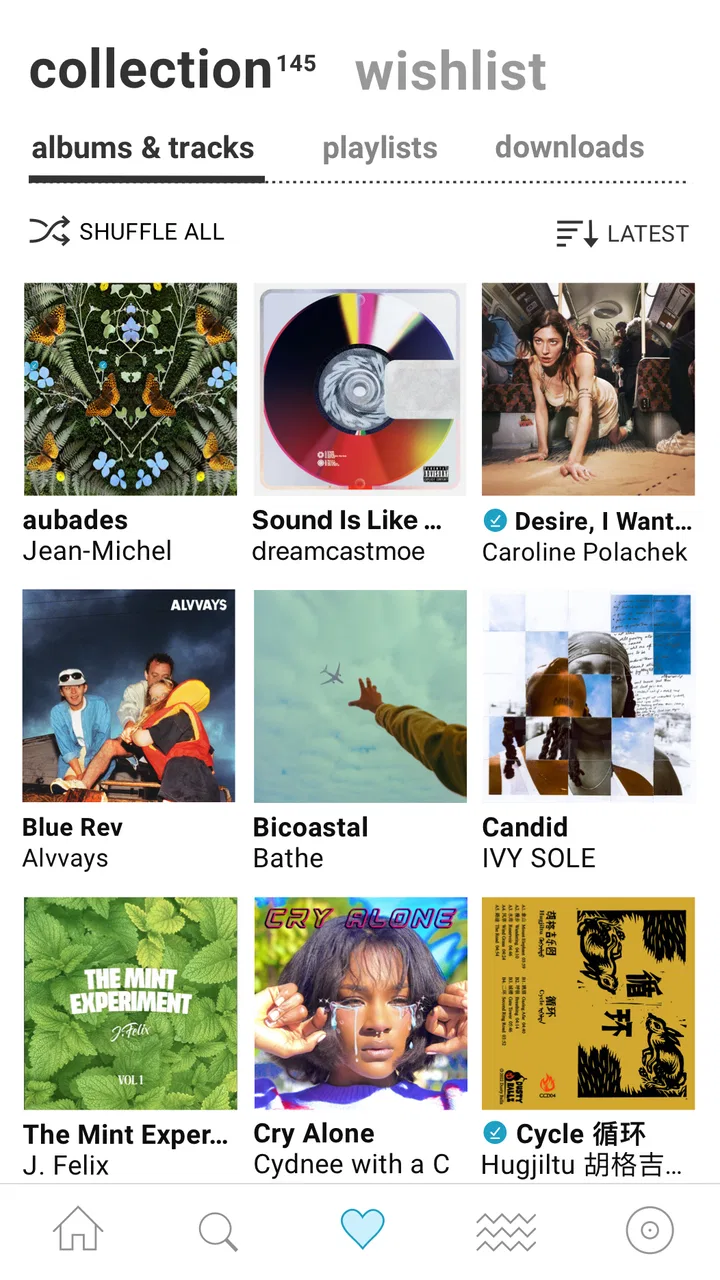
On a normal day, I might use it after hearing a recommendation from a friend. I search for the artist, listen to enough of the release to understand its mood, read the description, and then decide whether it deserves a place in my collection. That workflow feels closer to visiting a shop and reading liner notes than tapping through an anonymous stream. It is particularly satisfying when I want to discover music outside the most visible charts.
A better home for complete releases
Bandcamp makes the most sense when I listen to albums, EPs, singles, and other artist-led releases as intentional packages. The release page is not merely a launch point for a song; it gives the music a sense of identity. I can pay attention to the artwork, the artist name, the release context, and the relationship between tracks.
This is one of the app’s less obvious strengths. If I am exploring experimental electronic music, independent rock, ambient work, metal, jazz, or a niche label, the experience often feels more focused than a mainstream service’s recommendation screen. I am not just asking an algorithm what sounds similar. I am learning which artists are connected, which labels have a consistent taste, and which releases deserve a closer listen.
There is also a useful distinction between discovering an artist and deciding to buy. I can investigate first rather than committing immediately. My practical tip is to use the app in two passes: first collect a short list of releases that genuinely interest you, then return later and make purchases after listening with headphones or reading the release details carefully. That prevents the excitement of discovery from turning into a pile of impulse purchases.
Buying music changes the way I listen
The strongest reason to choose Bandcamp is the connection between listening and support. On many streaming platforms, my individual play feels distant from the artist’s income. Here, a purchase feels like a direct vote for a particular musician or release. I find that makes me more attentive: I revisit albums I bought, remember where I found them, and feel more invested in artists I might otherwise have forgotten.
That does not mean every listener will enjoy the model. Someone who wants one app for radio, playlists, podcasts, chart music, and effortless discovery may find Bandcamp too specialized. It is not the obvious replacement for a general entertainment subscription. I would recommend it alongside a streaming service for many people, not necessarily instead of one.
A useful everyday scenario is a long commute or a quiet evening at home. I can choose one purchased release rather than letting an endless queue make every decision for me. For me, that creates a calmer listening session. The trade-off is that I need to make the choice myself, and the app does not always provide the same frictionless flow that a large streaming platform is designed to deliver.
What the current version means for existing users
The current version, 3.3.5, is the version I would assess when deciding whether to install the app today. It shows that Bandcamp remains an actively maintained mobile product rather than an abandoned companion to its website. Still, a version number alone is not a promise that every part of the experience has been redesigned or that every complaint has disappeared.
For existing users, the practical benefit of staying current is straightforward: use the newest available build so the app is aligned with the present Android experience. I would also avoid judging Bandcamp only by its rating. A 3.2 average is neither a disaster nor a ringing endorsement; it points to a product with a strong underlying purpose and a mobile experience that may divide users depending on what they expect from it.
People who already buy releases through Bandcamp will probably understand the app quickly. It is most valuable as a portable way to browse artists and purchases, rather than as an attempt to imitate every feature of the largest streaming platforms. New users should give themselves time to understand that distinction before deciding whether it fits their habits.
Small workflows that make the app more useful
My first practical suggestion is to search by label or scene, not only by artist. If you already like one release, exploring the surrounding label can reveal a more coherent set of recommendations than repeatedly searching broad genre terms. This is especially useful for niche music, where the most interesting discoveries may not appear in mainstream recommendation feeds.
Second, treat release pages as buying decisions rather than quick song previews. Listen for the overall mood and sequencing, then check whether the release is something you will return to. The app becomes much more rewarding when purchases represent a personal collection instead of a temporary reaction to a single track.
Third, use it when you have a specific listening intention. I get more from Bandcamp when I want to explore a scene, follow an artist’s work, or support a release. When I only want background music with no decisions, a traditional streaming app is usually more convenient. Recognizing that difference saves frustration and makes both types of service easier to use.
Finally, keep expectations realistic about mobile convenience. Bandcamp’s value is in its artist-centered marketplace and discovery culture. If you are comparing it directly with a service built around huge playlists and instant algorithmic playback, compare the purpose as well as the interface. The question is not simply which app has more music; it is whether you want to consume music continuously or choose music more intentionally.
Where Bandcamp still has room to improve
The biggest limitation is that the app can feel less immediate than the alternatives many people already know. A listener accustomed to opening an app and receiving a polished stream of personalized music may see browsing and buying as extra work. I do not consider that effort pointless, but it is still effort, and the app does not hide it.
The rating from its Android audience reinforces that mixed impression. Some of the dissatisfaction likely comes from a mismatch between expectations: users may arrive expecting a full subscription streamer, while Bandcamp is fundamentally organized around artists and releases. That does not excuse rough edges, but it explains why the same design can feel meaningful to one person and inconvenient to another.
Another gap is breadth of purpose. Bandcamp is excellent for discovering and supporting independent music, but it is not where I would go first for every kind of audio. If my main interests include podcasts, spoken-word programming, large editorial playlists, or a highly automated radio experience, another app is likely to serve me better. Bandcamp’s focused identity is a strength, but it also defines its limits.
The purchase model can require more thought than a subscription. I need to decide which releases deserve my money, and I may not want to buy every album I sample. That is a healthy trade-off for people who value direct support, yet it can be inconvenient for listeners who want unlimited experimentation without individual decisions.
I would also skip it if my phone is mainly a tool for playing whatever is already popular. The app’s best discoveries often come from active exploration, and a user who never wants to browse artist pages or investigate unfamiliar releases may not see enough benefit. In that case, a mainstream streaming service will probably feel faster and more natural.
What I would watch as the app evolves
With version 3.3.5 as the current reference point, I would watch how Bandcamp balances its original artist-support mission with the expectations of modern mobile users. The important question is not whether it becomes a copy of Spotify or Apple Music. I would rather see it preserve its identity while making discovery, purchasing, and listening feel more connected.
For existing users, future improvements would matter most if they reduce unnecessary friction around finding a release and returning to music already purchased. For new users, clearer guidance about the difference between buying music and subscribing to a streaming catalogue would make the first session less confusing. Those changes would improve the experience without weakening the app’s central purpose.
I would also pay attention to whether the mobile app continues to feel like a useful part of the Bandcamp ecosystem rather than merely a smaller storefront. Its strongest feature is the sense of connection between artist, release, and listener. Any evolution should protect that relationship, because it is precisely what separates Bandcamp from a generic music player.
Who should install it?
I recommend Bandcamp to listeners who actively want to discover independent artists, explore complete releases, and spend money in a way that feels more personal than a standard stream. It is also a good fit for collectors who enjoy choosing albums instead of letting a recommendation engine control the entire session.
I would be more cautious if you want a single, effortless audio subscription. The free app may cost nothing to install, but the experience is built around buying releases and supporting artists, not around unlimited access to a uniform catalogue. That distinction should be clear before you make it your main music app.
For me, Bandcamp works best as a focused companion to everyday streaming: the place I go when I want to find something less obvious, understand an artist’s release, and make a deliberate choice. Its average rating of 3.2 reflects that it is not perfect, but the concept remains valuable. Bandcamp is worth trying when supporting artists matters as much to you as pressing play.
FAQs for Bandcamp
01What is Bandcamp and how does it work?
Bandcamp is a platform where artists can sell their music directly to fans. It allows users to stream or download music, while artists can set their own prices and offer merchandise. Fans can explore new music by genre, location, or popularity, making it a versatile tool for music discovery.
02Is Bandcamp free to use?
Yes, Bandcamp is free to use for browsing and streaming music. However, purchasing music or merchandise is not free. Artists set their own prices, and users can choose to pay more than the minimum to support the musicians. Some artists may offer 'name your price' downloads, including free options.
03What formats are available for music downloads on Bandcamp?
Bandcamp offers a variety of formats for music downloads, including MP3, FLAC, ALAC, AAC, Ogg Vorbis, WAV, and AIFF. This ensures that users can choose the best format for their devices and preferences, whether they prioritize audio quality or file size.
04Can I use Bandcamp offline?
Yes, once you've purchased and downloaded music from Bandcamp, you can listen to it offline on your device. The Bandcamp app also allows offline listening via its mobile app by downloading tracks directly to your phone, providing flexibility and convenience for users on the go.
05How do artists benefit from using Bandcamp?
Artists benefit from Bandcamp by receiving a larger share of sales compared to traditional music distribution services. They control pricing and can directly engage with fans. Bandcamp also offers analytics so artists can understand their audience better, making it a valuable platform for independent musicians.
Pros
- User-friendly interface for easy navigation.
- High-quality audio streaming available.
- Supports independent artists directly.
- Diverse music genres to explore.
- Offline listening with app download option.
Cons
- Limited social features for interaction.
- Some tracks may not be available for streaming.
- No direct playlist sharing with friends.
- Occasional app performance issues.
- In-app purchases can be costly.

Bandcamp
Gallery